
Anthropic just did something subtle and potentially massively impactful: they shipped a ‘Mythos-class’ capability to the public, behind some heavyweight guardrails.
That’s Claude Fable 5 and Claude Mythos 5 (restricted access).
Same underlying model. Different guardrails. Different blast radius.
This distinction matters because it’s not “a new model vs an old model”. It’s one brain, two safety postures. Fable 5 is Mythos with classifiers, refusals, and fallbacks in high-risk domains. Mythos 5 is the configuration with some of those safeguards lifted — deployed to ‘trusted’ partners through Project Glasswing.
Anthropic is positioning Mythos/Fable as a step-change across software engineering, long-horizon agentic work, knowledge work and science. Their claim is ‘it answers better’ — it’s it stays useful longer, and compounds over time. But the security posture is the real headline, and potential danger.
When a lab says “we’re releasing the public version, but in cyber and bio it may refuse and fall back to a less capable model”, they’re admitting something: capability has crossed into domains where the default user is no longer the primary risk.
The risk you’ve all heard about is ‘what can a motivated actor can do at scale.’ The answer is a lot and I hasten to add no model has remain unbroken for long…
But the release of mythos -IF it meets expectations – is that it brings us to other uncomfortable implications; my “doomsday” framing isn’t about security consciousness or vibe coding alone. It’s about reliability.
A model that can consistently and effectively execute multi-step work as well or better than a human — without staged instructions, without constant supervision — changes the shape of effort, compresses time. It reduces the number of human decision points required to get from intent → outcome. it reduces human input time further, and faster.
Competence is becoming cheap. The concept of ‘advantage’ changing and humans remain to provide judgement and governance.
All of this now also controlled with trust / capability tiers, who is allowed to run it, on what systems, with what monitoring? Who is trusted to run the modes, who benefits from the capability? This is the first visible sign of a world where capability tiers exist, but access tiers matter more.
So is it doomsday? Not today. But… it’s perhaps a day to remember — the day human reliability stopped being the benchmark, because machine reliability became the baseline.
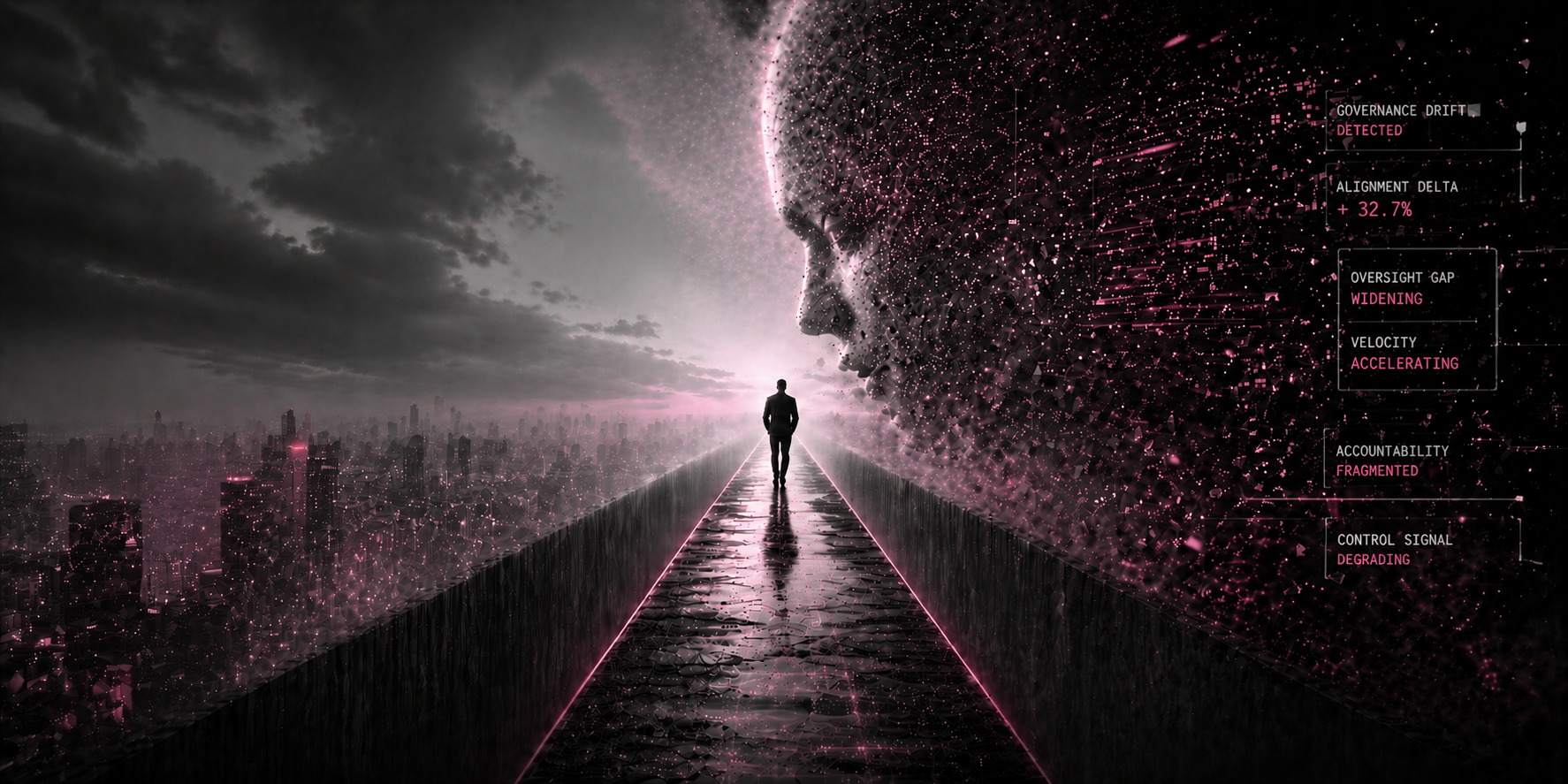
So my big question on this is now: “If Mythos-class capability is going to spread anyway, can our governance — controls, institutions, workflows — keep pace?”
Are you evolving fast enough, do you own your intelligence, and have you put the systems in place to host and manage your AI workloads? If not – I’d love to chat.
